
Applications of Python
Introduction
Python is one of the world's most popular high-level programming languages. It is widely used because of its simple syntax, readability, portability, extensive standard library and powerful third-party libraries. Python is suitable for beginners as well as professional software developers.
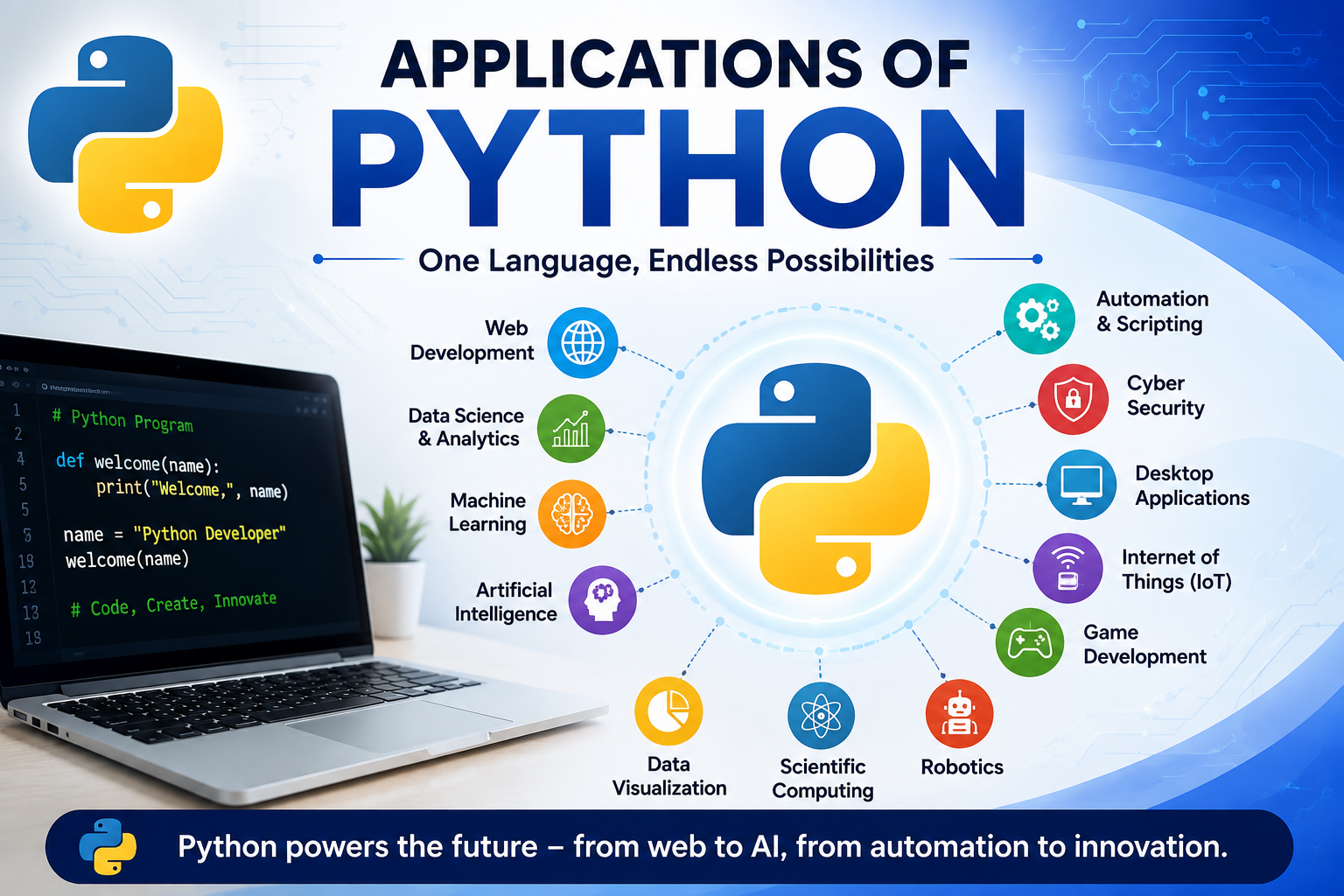
Today, Python is used in almost every field of Computer Science, including Web Development, Artificial Intelligence, Machine Learning, Data Science, Cloud Computing, Cyber Security, Automation, Robotics, Internet of Things (IoT), Scientific Computing and Desktop Application Development.
Why Python is Preferred?
- Simple and Easy to Learn
- Readable Syntax
- Open Source
- Platform Independent
- Large Standard Library
- Supports Multiple Programming Paradigms
- Excellent Community Support
- Thousands of Third-Party Libraries
Major Applications of Python
| Application Area | Examples |
|---|---|
| Web Development | Django, Flask, FastAPI |
| Desktop Applications | Tkinter, PyQt, Kivy |
| Artificial Intelligence | TensorFlow, Keras |
| Machine Learning | Scikit-learn, XGBoost |
| Data Science | NumPy, Pandas |
| Automation | Scripting, Task Automation |
| Cyber Security | Penetration Testing |
| Cloud Computing | AWS, Azure, Google Cloud |
| IoT and Robotics | Raspberry Pi, Arduino |
1. Web Development
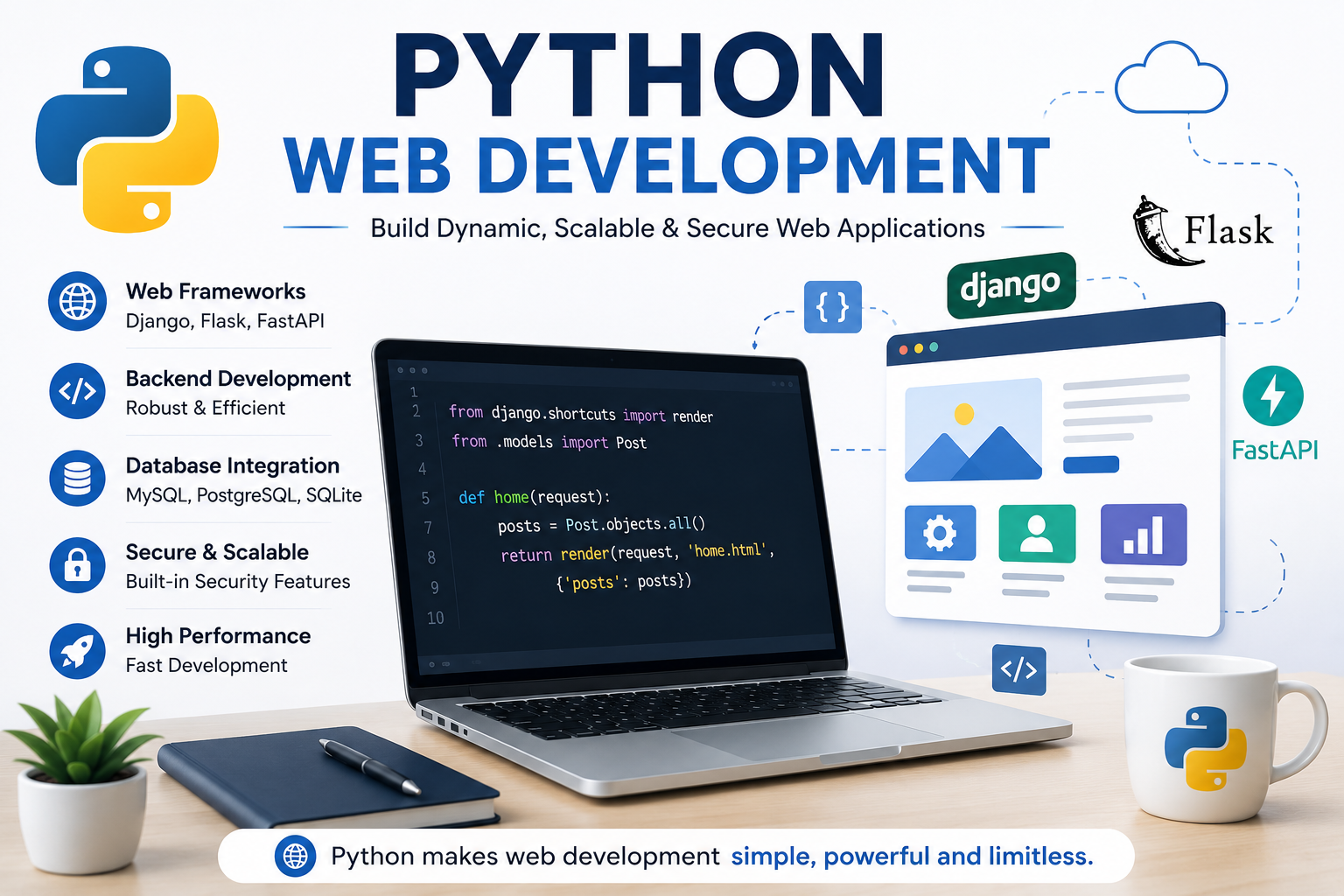
Python is extensively used for developing dynamic and secure websites. Popular frameworks such as Django, Flask and FastAPI help developers build scalable web applications with less code and faster development.
2. Desktop GUI Applications

Python supports desktop application development using GUI libraries such as Tkinter, PyQt, Kivy and wxPython. These applications can run on Windows, Linux and macOS with minimal changes.
3. Artificial Intelligence (AI)
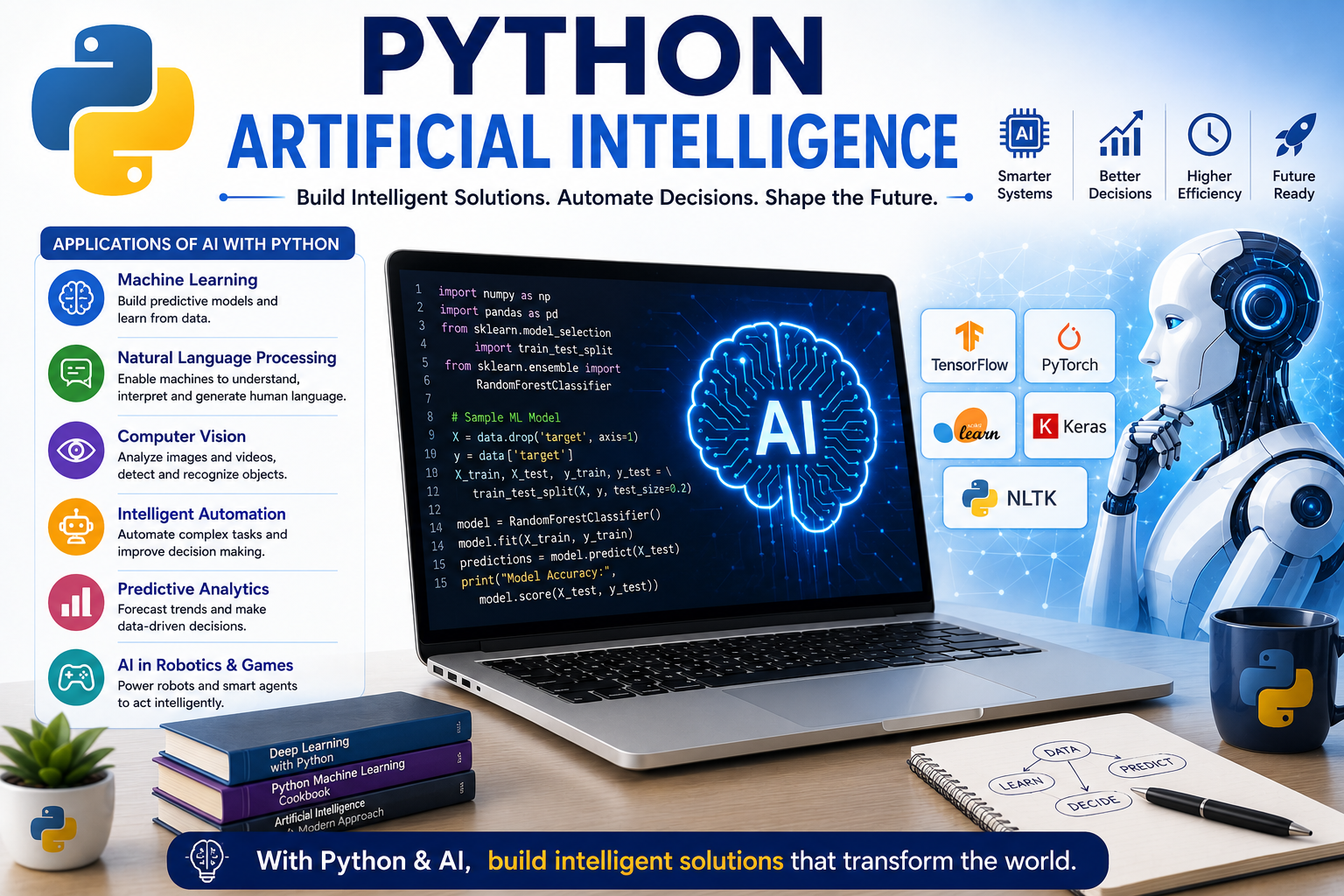
Python is the most widely used programming language for Artificial Intelligence because of its simplicity and powerful AI libraries such as TensorFlow, PyTorch and Keras.
4. Machine Learning
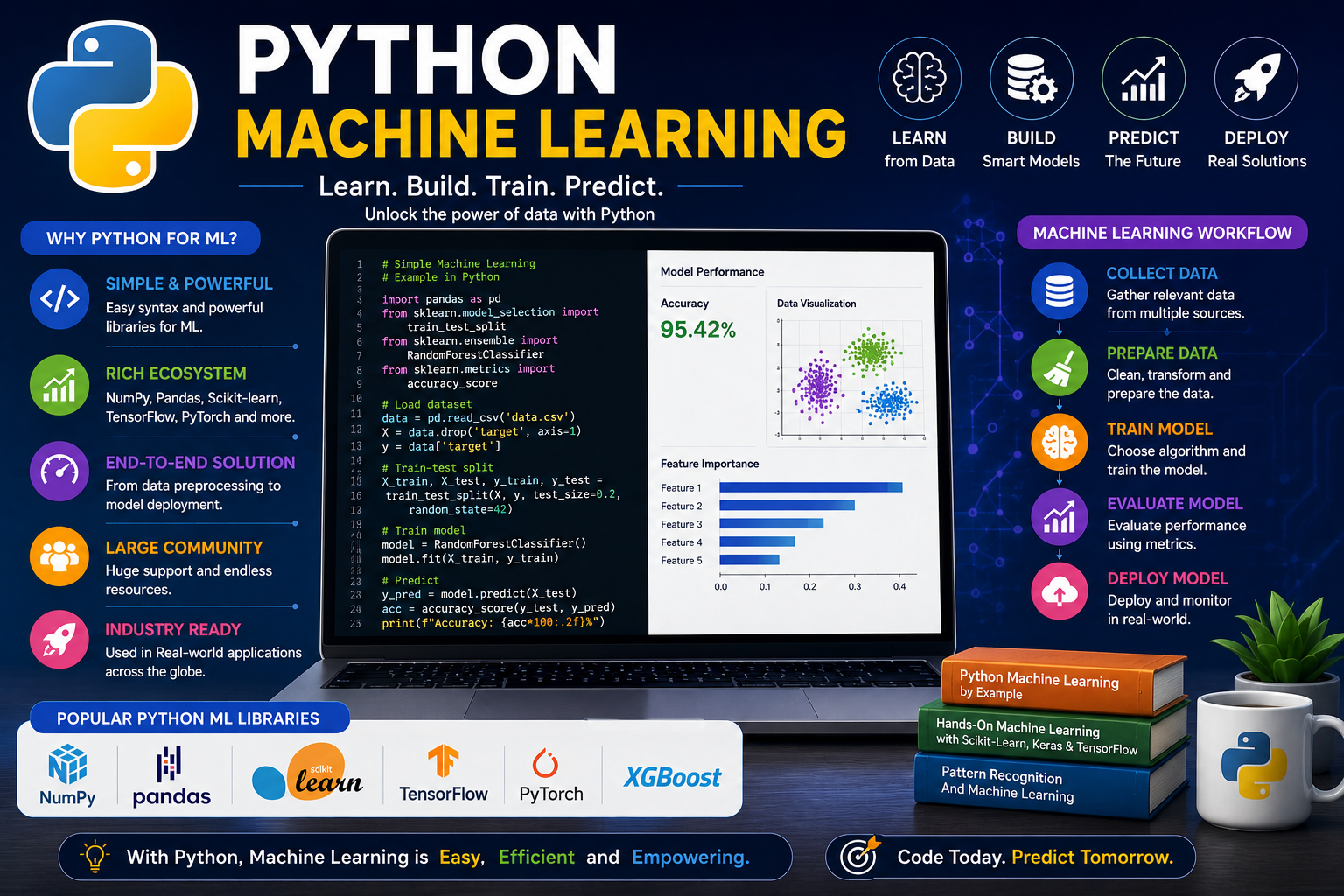
Python provides excellent Machine Learning libraries including Scikit-learn, TensorFlow and XGBoost for prediction, classification, recommendation systems and intelligent applications.
5. Data Science
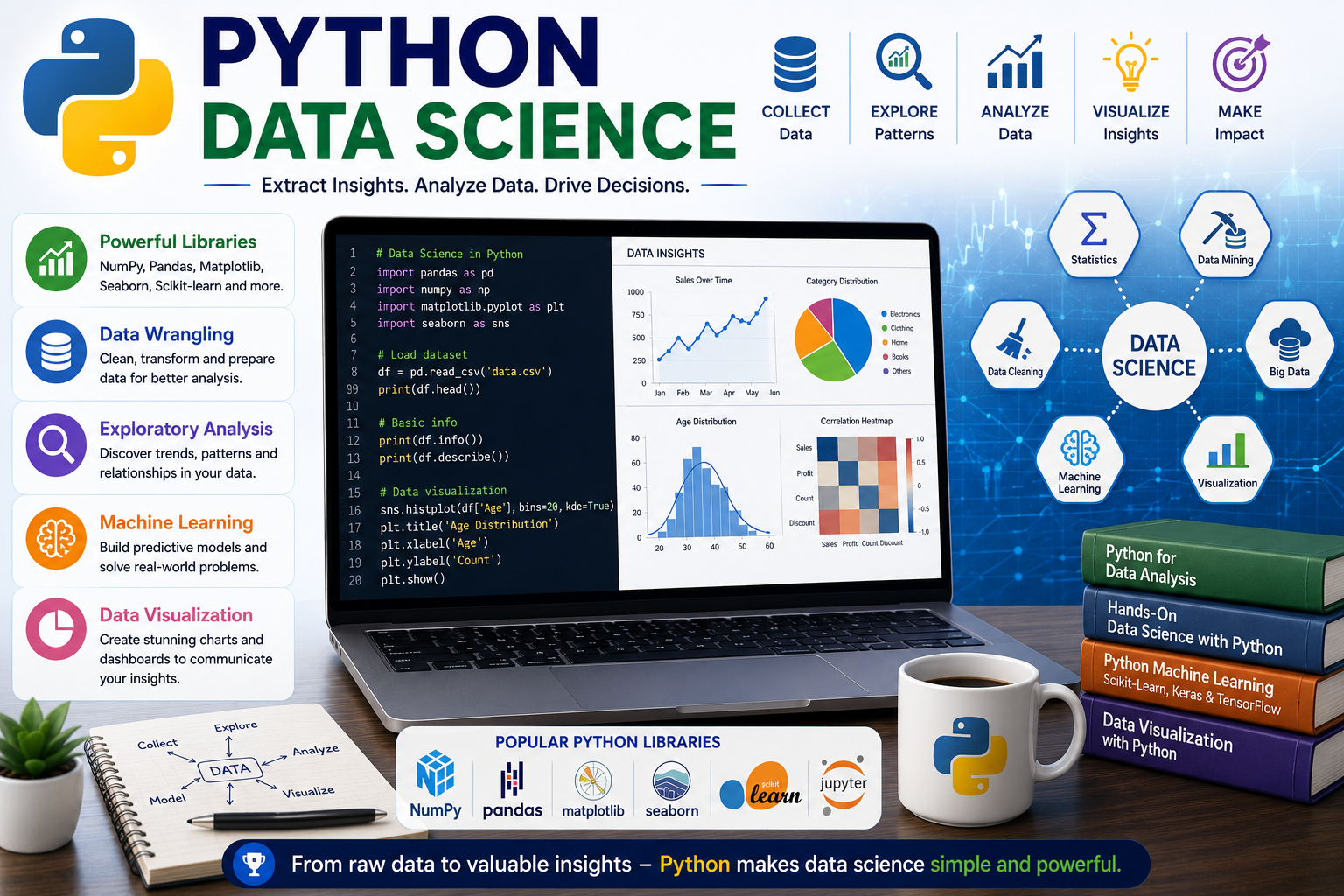
Python is the most popular programming language for Data Science. Libraries such as NumPy, Pandas, Matplotlib and Seaborn allow developers to perform data analysis, visualization and statistical computations efficiently.
6. Scientific Computing
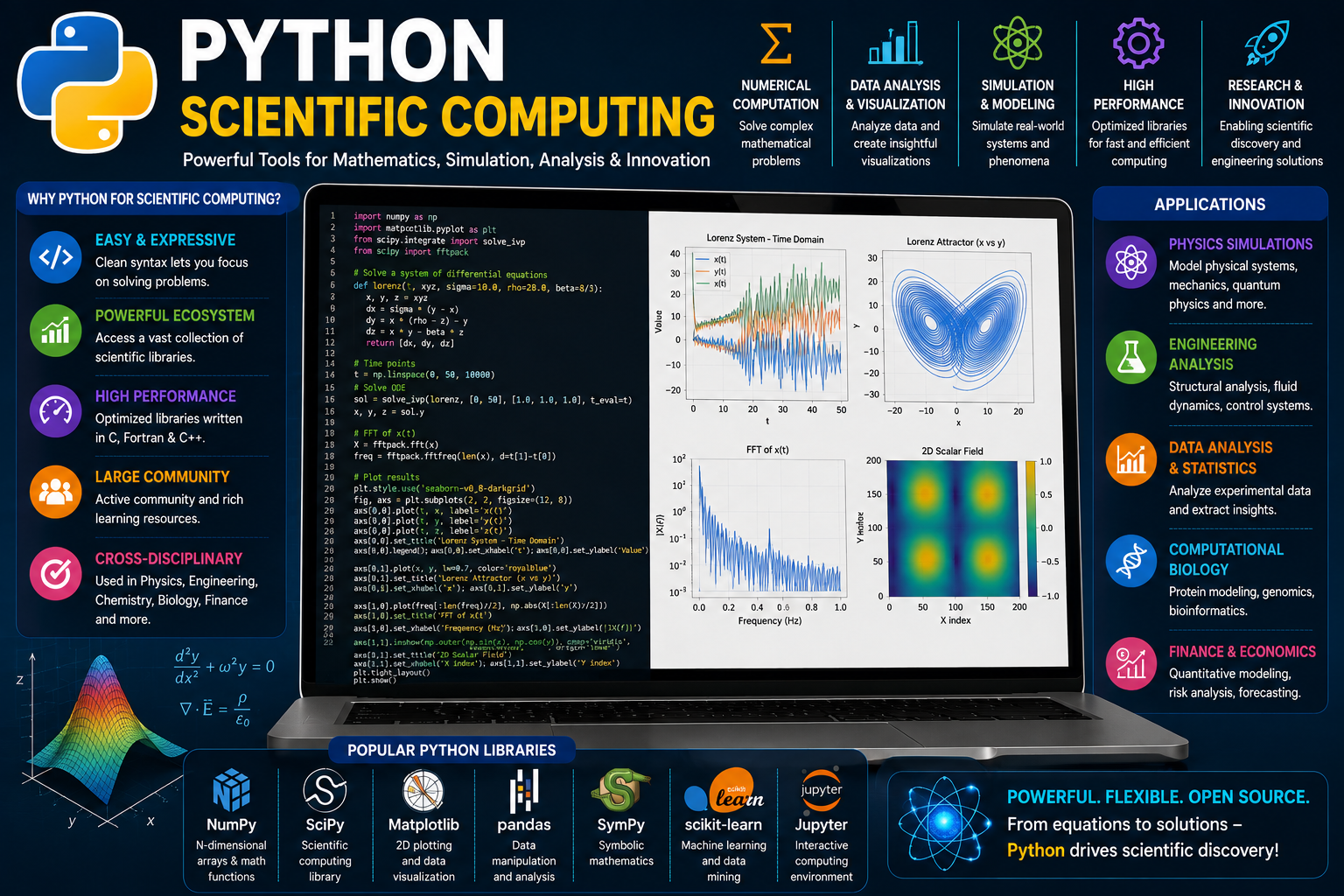
Python is extensively used in scientific research and engineering. Scientists use libraries such as SciPy for mathematical modelling, numerical computation and simulation.
7. Automation and Scripting
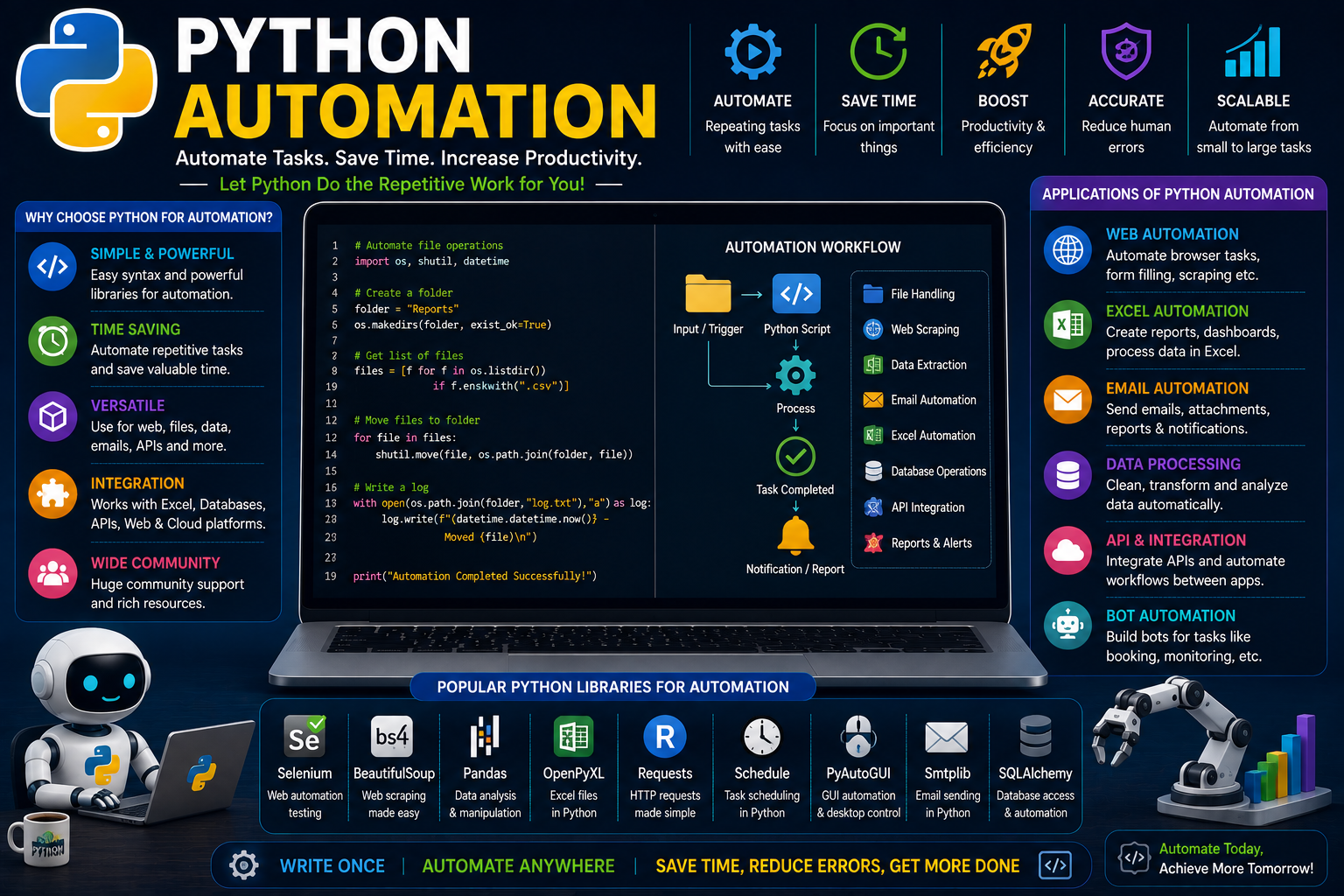
Python is widely used for automating repetitive tasks such as file management, email automation, report generation, web scraping, software testing and system administration.
8. Cyber Security
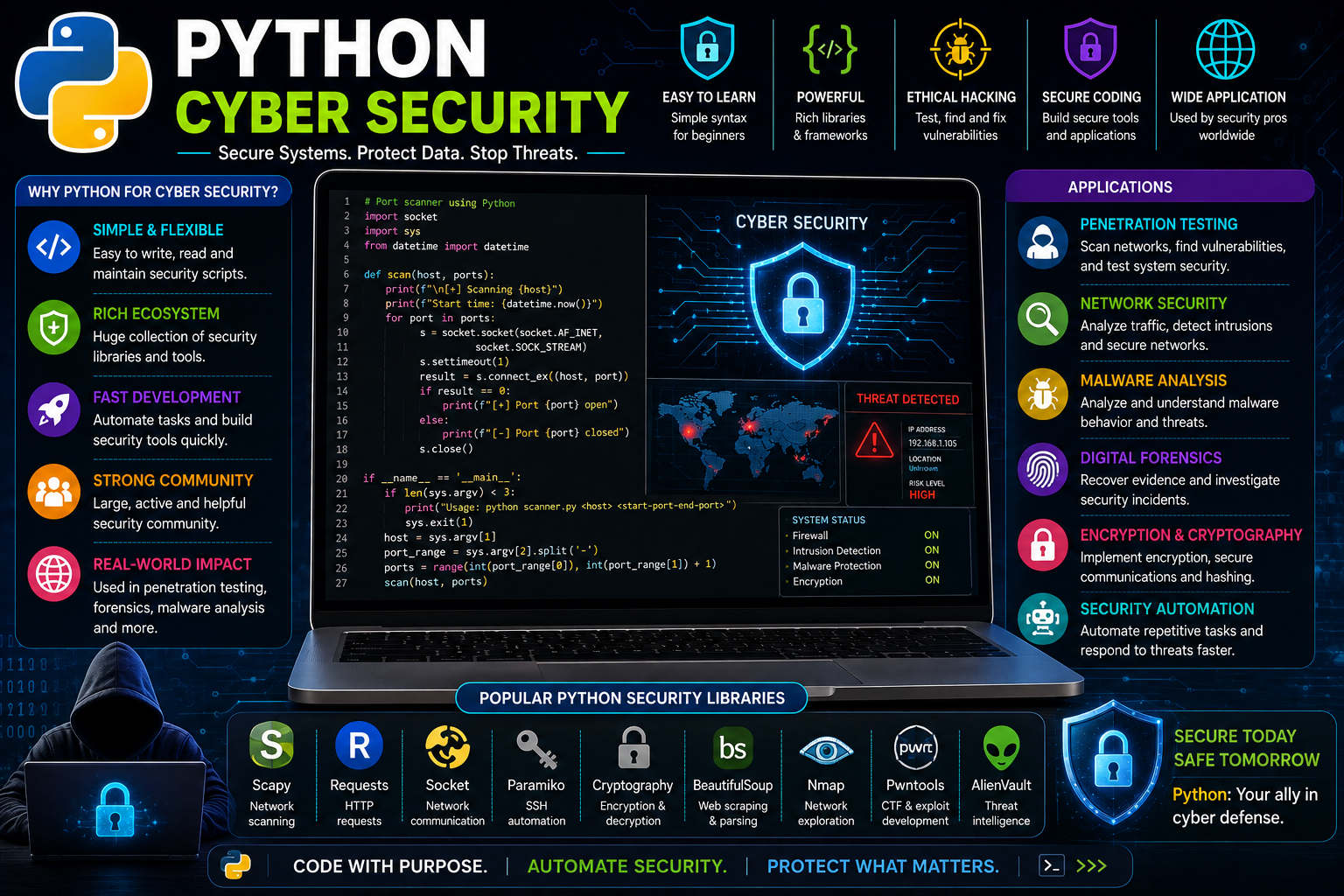
Python is used by cyber security professionals for penetration testing, network scanning, vulnerability assessment, malware analysis and ethical hacking. Popular security tools such as Scapy and Paramiko are written in Python.
9. Cloud Computing

Python is supported by major cloud platforms such as Amazon Web Services (AWS), Microsoft Azure and Google Cloud Platform (GCP). It is widely used to develop cloud applications, APIs and serverless computing solutions.
10. Internet of Things (IoT)

Python is used for developing IoT applications using Raspberry Pi, MicroPython and embedded devices. It enables communication between sensors, controllers and cloud platforms.
11. Robotics
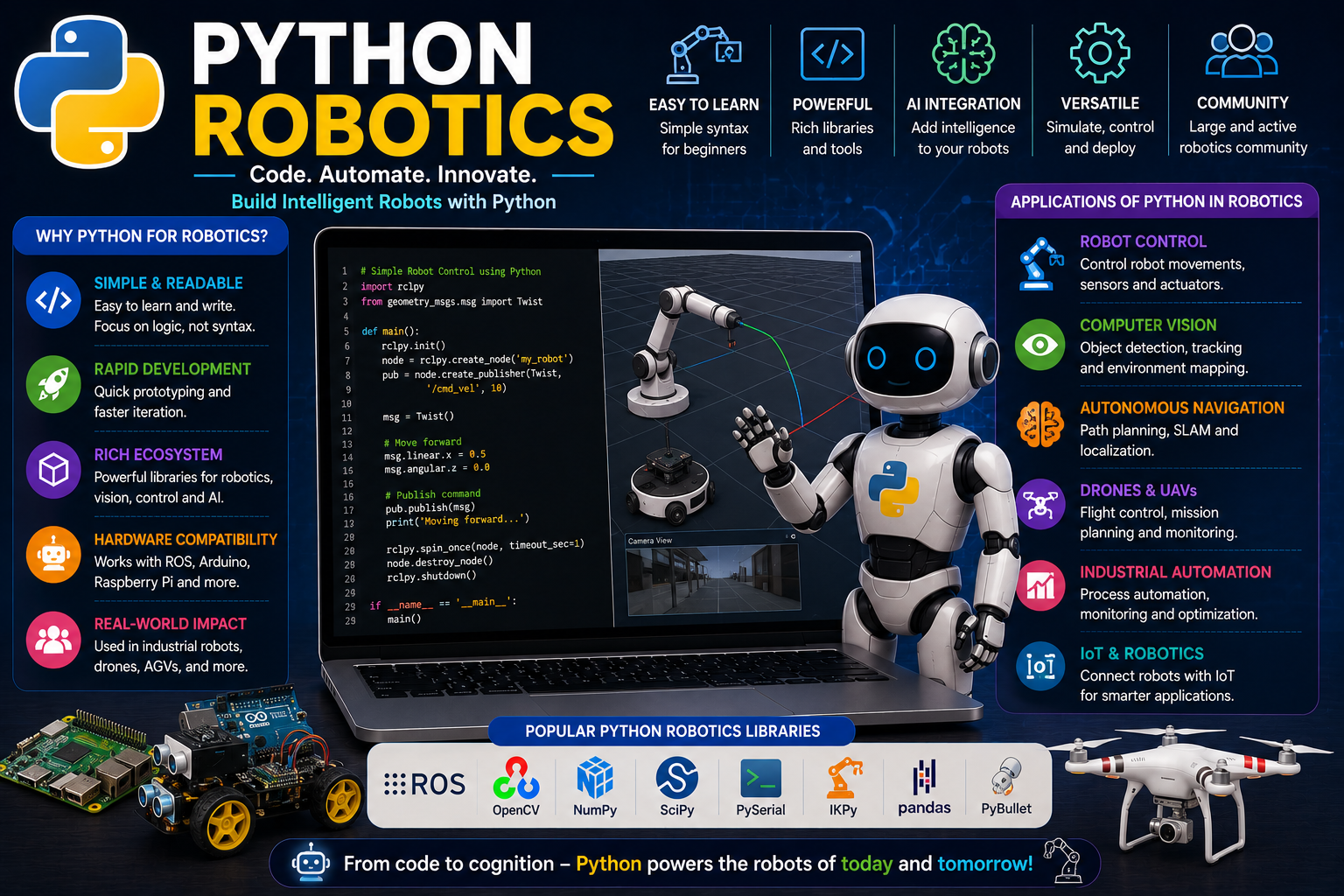
Python is widely used in robotics for controlling robotic systems, autonomous vehicles and industrial automation. It is also supported by the Robot Operating System (ROS).
12. Image Processing and Computer Vision
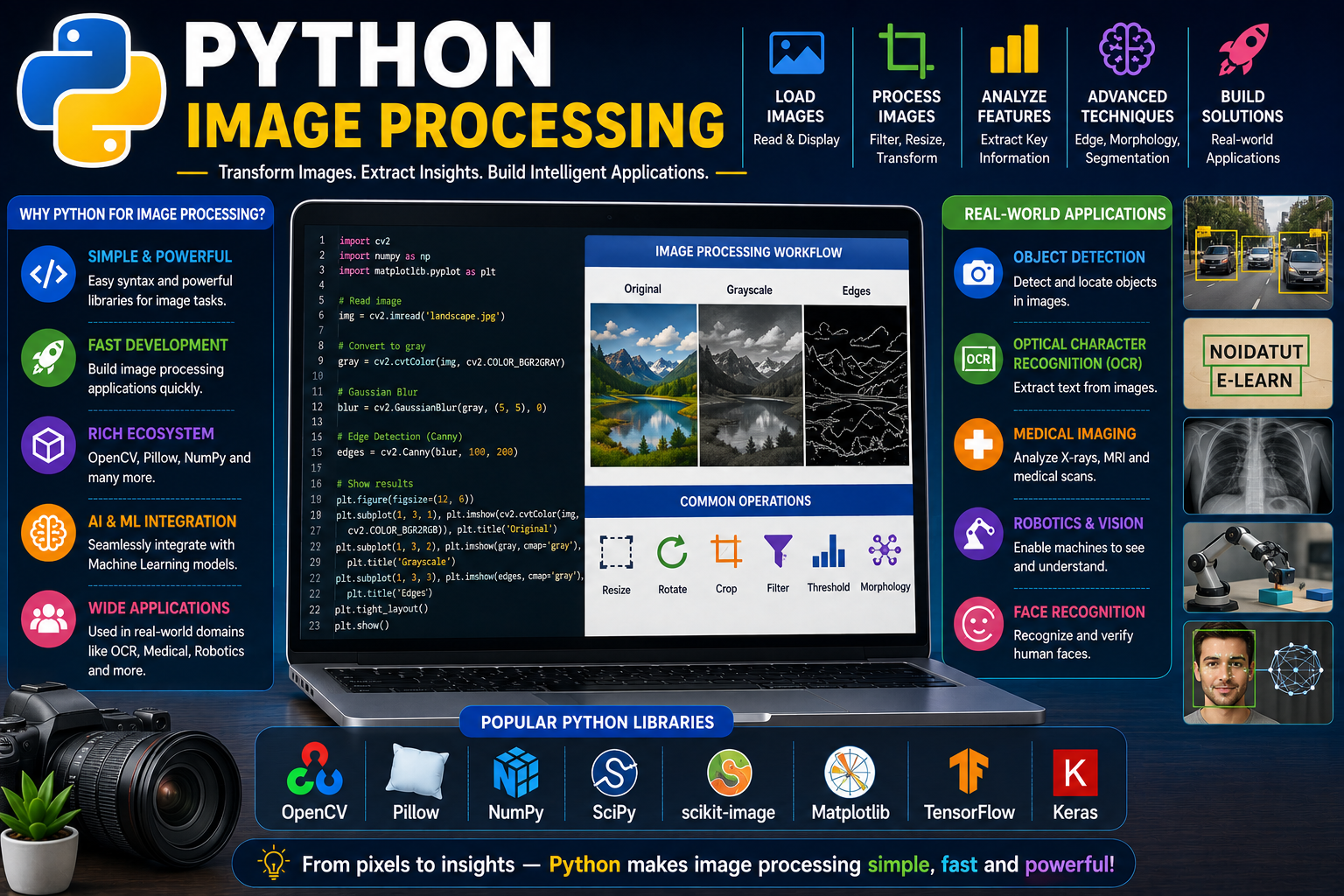
Python is widely used for image processing, face recognition, object detection and computer vision applications using libraries such as OpenCV, Pillow and scikit-image.
13. Natural Language Processing (NLP)
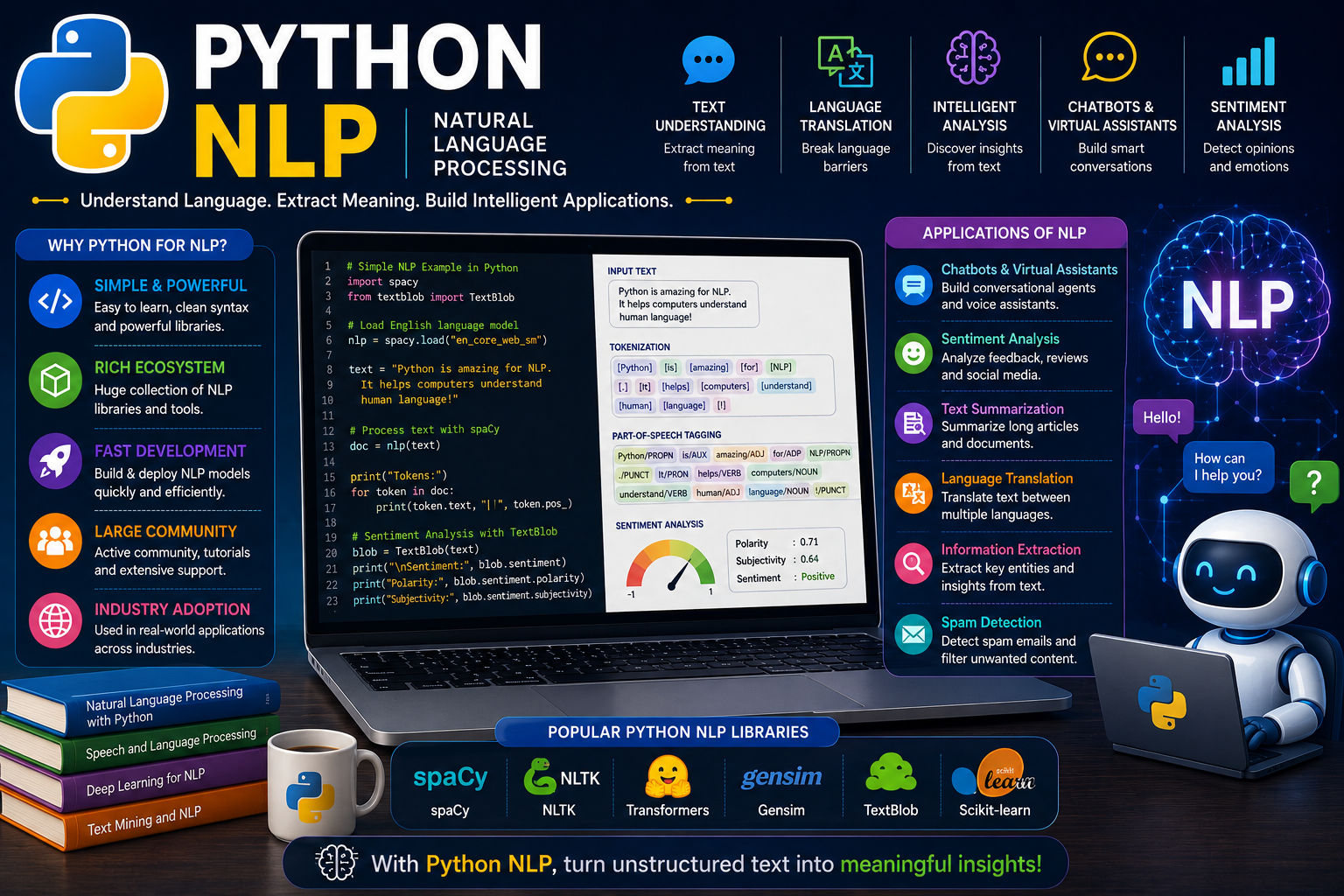
Python is extensively used for Natural Language Processing (NLP). It is used in chatbots, virtual assistants, language translation, sentiment analysis and speech recognition using libraries such as NLTK and spaCy.
14. Game Development
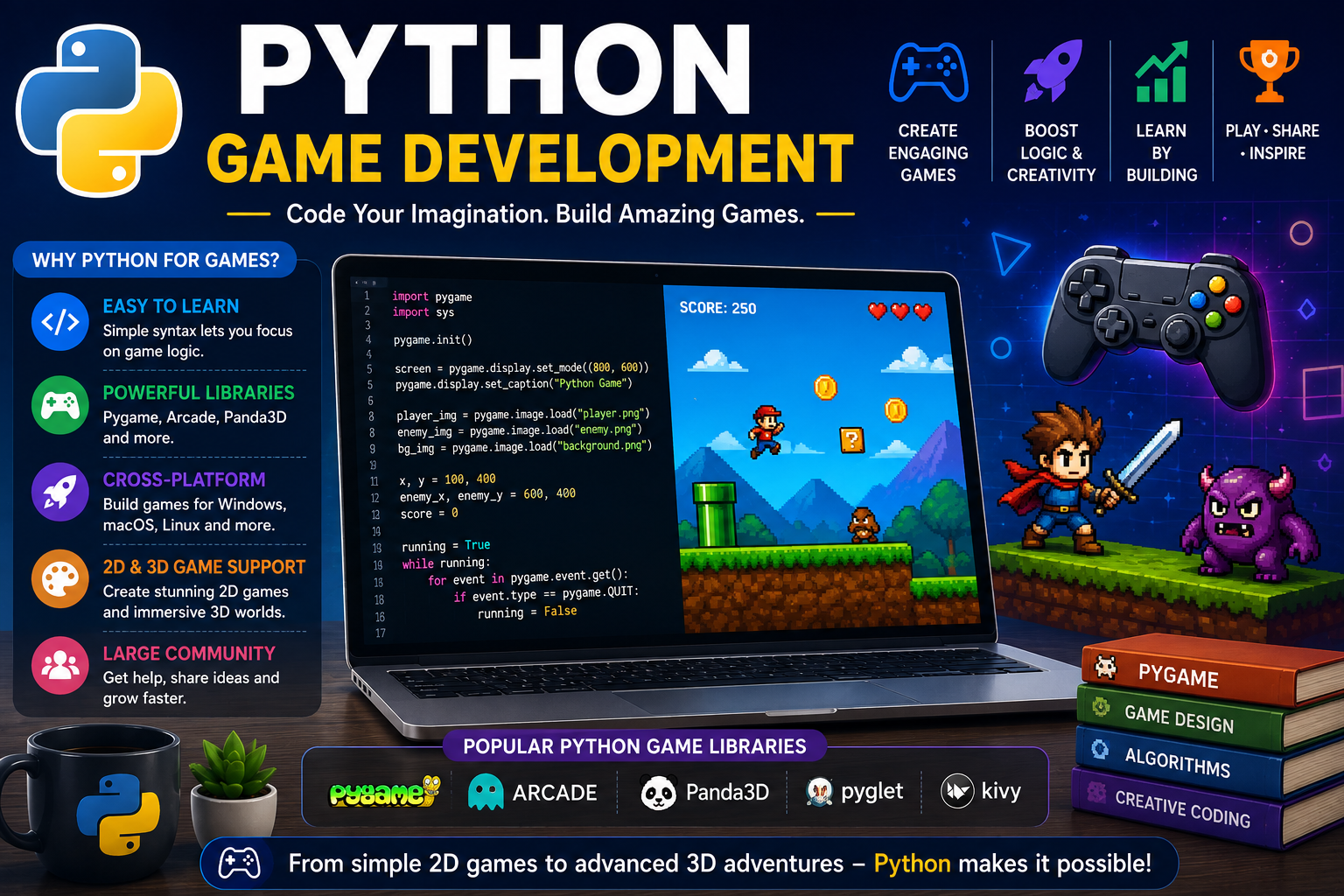
Python supports game development through libraries such as Pygame. It is commonly used for developing 2D games, educational games and game prototypes.
15. Database Applications
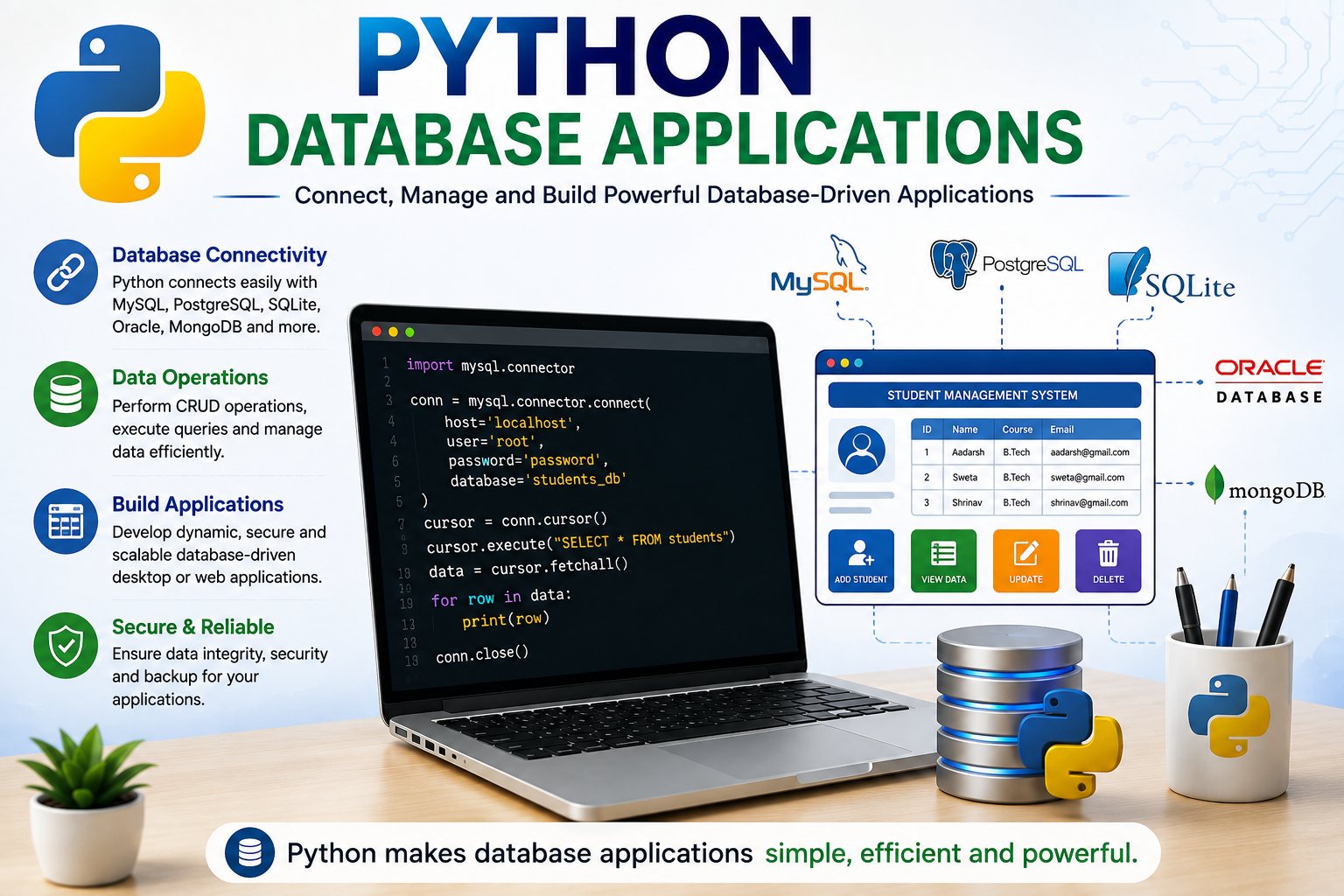
Python can connect with databases such as MySQL, PostgreSQL, Oracle, SQLite and MongoDB. It is widely used for developing database-driven applications and enterprise software.
Summary of Python Applications
| Application Area | Popular Libraries / Frameworks |
|---|---|
| Web Development | Django, Flask, FastAPI |
| Artificial Intelligence | TensorFlow, PyTorch |
| Machine Learning | Scikit-learn |
| Data Science | NumPy, Pandas |
| Desktop Applications | Tkinter, PyQt |
| Automation | Python Scripts |
| Cyber Security | Scapy, Paramiko |
| Image Processing | OpenCV, Pillow |
| Game Development | Pygame |
| IoT | MicroPython, Raspberry Pi |
Advantages of Using Python
- Simple and easy to learn.
- Supports multiple programming paradigms.
- Large collection of libraries.
- Platform independent.
- Open source and free.
- Used in almost every domain of Computer Science.
AKTU Viva Questions
- What are the major applications of Python?
- Why is Python popular in Artificial Intelligence?
- Which framework is commonly used for web development in Python?
- Name any two Python libraries used in Data Science.
- Which Python library is used for GUI development?
- What is the role of Python in Machine Learning?
- Can Python be used for IoT applications?
- Name two game development libraries in Python.
- Which library is commonly used for image processing?
- Why is Python preferred over many other programming languages?